
The Winter Olympics are by far one of the most anticipated sporting events in the world. They occur once every four years, and 2026 brings the Winter Olympics to Milano-Cortina in Italy. With 16 different sports and hundreds of athletes, you can simply never run out of excitement to watch.
Even so, we decided to compile a list of the 5 winter Olympic sports we are most excited to see. Sports like Alpine skiing and luge are so popular that people watch them live on TV and in person. More than that, they are sports you can play as video games on PC and consoles. So, let’s take a look at the excitement the 2026 Winter Olympics will bring.
Figure Skating
Figure skating is the oldest sport at the Winter Olympics, dating back to 1902. It is the sport we associate with awe-inspiring skill, enchanting outfits, and brimming passion. At the 2026 Milano-Cortina Winter Olympics, you can expect to see five different figure skating competitions, as described below.
Men’s Single Skating
Men’s single skating is one of the two figure skating competitions with the strictest scoring guidelines. The skaters have to perform the short program and the free skating program. During their programs, they have to perform mandatory jumps, spins, step sequences, and choreographic sequences. They have to complete these mandatory parts of the program precisely as described in the rulebook.
Women’s Single Skating
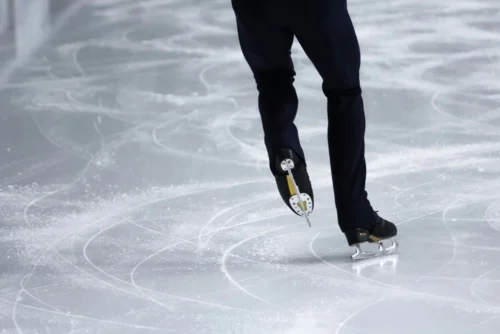
Women’s single skating has the same rules as men’s single skating. It requires mandatory jumps like the Axel, the Salchow, and the Lutz. It also requires forward and backward spins and coreographic sequences. All single skaters must wear modest and dignified attire appropriate for athletic competition. Single skaters were first allowed to dance to music with lyrics at the 2018 PyeongChang Winter Olympics.
Pair Skating
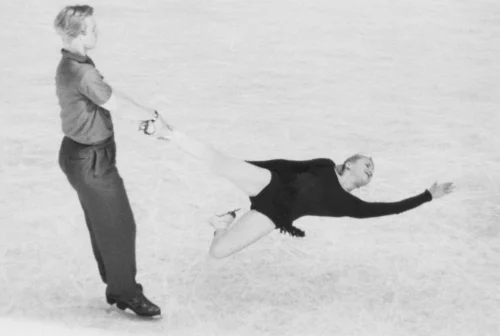
The pair skating program consists of a short program and a free skating program. It must be performed by one man and one woman. During the 2:40 minutes of the short program, they must perform pair lifts, twist lifts, jumps, and death spirals, among others. The skaters must perform these elements in a fluid and choreographed manner, leaving an impression of unison and harmony.
Ice Dance
Ice dance is the most free-spirited and playful of the figure skating disciplines. This event consists of two programs: the rhythm dance and the free dance. The rhythm dance must include a choreographic element, a short six-second lift, a set of twizzles, and a step sequence. The free dance program also includes required elements like spins and lifts, but it gives the skaters more freedom.
Team Event
The team event is not a skating event by itself. Rather, it adds up all of the points that the skaters earned in the previous events. In doing so, it ranks all of the skaters in the Olympics and determines the medalists.
Snowboard
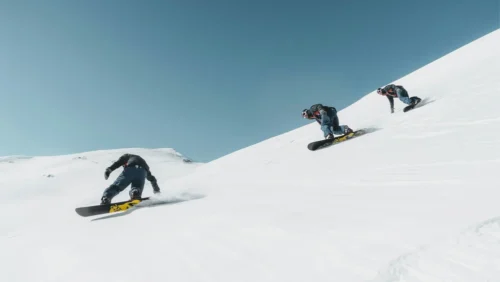
Snowboarding is one of the most recent additions to the Winter Olympics, dating back to 1998. This sport has five individual events for men and women boarders. While not all snowboarders compete in all events, you will be sure to see daredevil moves, incredible speed, and records broken.
Big Air
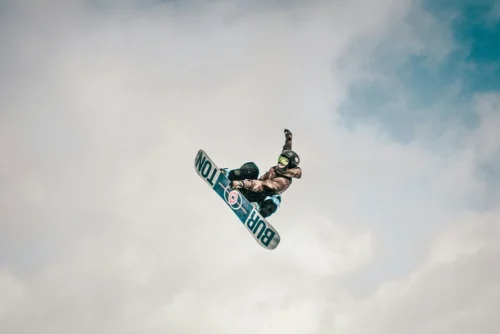
Big Air is perhaps one of the most exciting events in the entire Olympics. It requires the snowboarders to go downhill and jump off a ramp for one big jump— hence its name. While in the air, they need to do flips, spins, and tricks like the Double Cork 1080 and the Backside 720 to impress the judges. The boarders are judged based on the jump’s difficulty, execution, amplitude, and landing. Each boarder gets three jumps in the final, with the two highest scores determining their ranking.
Parallel Giant Slalom
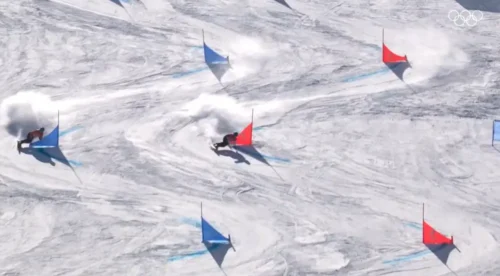
The parallel giant slalom is so thrilling because it’s one of the rare events that puts the competitors right next to each other. Both boarders go downhill through gates, cutting as close as possible to get through the finish line first. During the qualification round, each rider completes one run on each of the courses, aiming to be among the top 16. In the Finals, the head-to-head heats allow for one run only.
Half-pipe
The half-pipe requires the snowboarders to ride wall to wall in the half-pipe, performing tricks as they go. The judges evaluate their performances based on the P.A.V.E.D. criteria. P.A.V.E.D. stands for: Progression, Amplitude, Variety, Execution, and Difficulty. Each boarder gets two runs in qualification and three runs in the final. However, unlike in Big Air, only the single best run counts towards the result.
Slopestyle
Slopestyle is an event that allows each rider to show off their best skills. The so-called playground includes everything from ramps and boxes to rails. The boarders do flips, spins, and tricks while going downhill, all with the goal of getting the best score. The judges score the runs based on the P.A.V.E.D. criteria, similarly to the half-pipe competition. The tricks in this event are like something out of a movie, which is what makes it so exciting.
Snowboard Cross
Snowboard cross is a fast-paced race that puts four riders shoulder-to-shoulder. They race on a course with jumps, rollers, and turns, with the goal of going through the finish line first. The 32 best riders from the qualifiers move on to the elimination round. The two best results from each heat move forward until only four riders remain for the final.
Alpine Skiing
Alpine skiing is a staple of the Winter Olympics, and it has been since 1936. While this sport has had quite a few changes during its long history, it has never lost its appeal. Its current format consists of two speed disciplines and two technical disciplines. The best part is that you can watch these events and play them as video games on gaming consoles.
Slalom
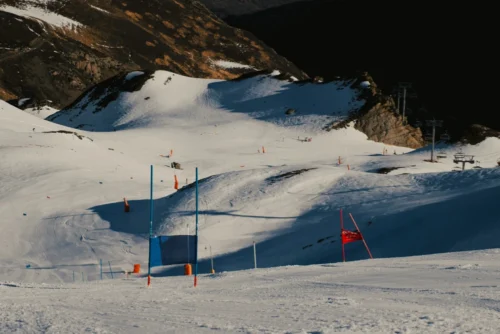
Slalom is the most technically demanding race in Alpine skiing. It has the shortest run time— between 50 and 60 seconds, but it also has the most gates. Skiiers need to move through the gates with agility, while also making sure they don’t sacrifice their speed. The skiers take two turns on different course settings, with the fastest time counting towards the result.
Giant Slalom
Giant slalom is a technical discipline, but because the gates are further apart than in slalom, it allows for more speed. The gates are usually positioned to the left and right on the course, so that when the rider comes out of one gate, they need to take a sharp turn to pass through the next. The giant slalom run time is between 2 and 3 minutes, depending on the slopes.
Super-G
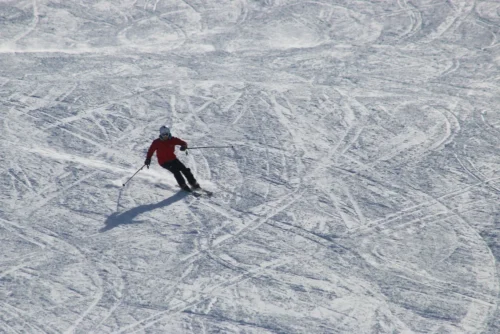
Super-G is the most recent addition to the world of Alpine skiing, having been added at the 1988 Winter Olympics. This event is a speed skiing discipline, certainly, but it demands a high level of precision, as well. The gates in Super-G are set further apart than in giant slalom, but they are closer than in downhill. The run time can be between 1 and 2 minutes.
Downhill
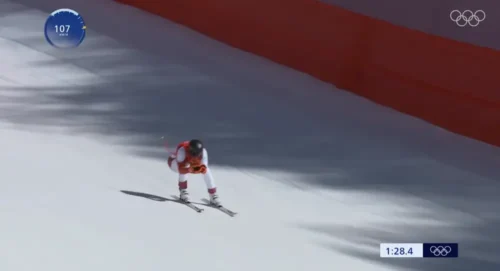
Downhill is the fastest Alpine skiing event, with the fastest recorded speed reaching 161.9 km/h (100.6 mph) at the FIS World Cup. Skiers go downhill in the familiar hunched-over position, which provides them with better aerodynamics. The downhill, due to its nature, doesn’t have many turns, and even when it does have them, they are very mild because of the high skiing speeds. The typical downhill run time is between a minute and a half and 2 minutes.
Luge
Luge is the fastest and potentially most dangerous sport at the Winter Olympics, reaching speeds of 150 km/h (93 mph). In luge, the racer launches from the start, using the spiked gloves to pedal and increase the speed. Once they have the right speed and acceleration, they lie down on the luge completely flat, with their feet first. The racers use their shoulders and hips to steer the luge gently without losing speed or spinning out. The five luge events are:
- Women’s singles
- Men’s singles
- Women’s doubles
- Men’s doubles
- Team relays
Ski Mountaineering
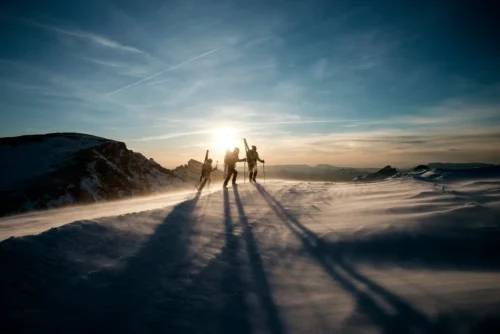
Ski mountaineering is the newcomer to the 2026 Winter Olympics, with its official debut. This sport requires athletes to ski uphill by using so-called “skins” on the bottom of their skis, which give them traction. Once they reach the section of the race that is too steep, they take their skis off and hike up to the top on foot. Once they reach the top, they put their skis on, without the “skins” and they ski downhill to the finish line. This sport has three events: men’s sprint, women’s sprint, and mixed relay.
Summary
Whatever your personal favorite winter Olympics sport, we can all agree that this will be a month of excitement. So, check your local TV listings for the Olympics schedule, and settle in to watch the world’s best winter athletes on one stage in picturesque Italy.
Leave a Reply